By Kelly Broling Smoak
Bozeman's historic homes are some of the most sought-after properties in Montana. From Victorian-era cottages to Craftsman bungalows, these houses carry a character that simply cannot be replicated in new construction. The wide front porches, original hardwood floors, and hand-crafted millwork tell a story that spans generations. But living in a home built in the early 1900s also comes with real challenges: dated electrical systems, drafty single-pane windows, and kitchens that were designed for a very different era of cooking and gathering.
The good news is that you do not have to choose between preserving your home's historic charm and enjoying the comfort and functionality of modern living. In Bozeman, where the historic preservation community is active and the appreciation for architectural heritage runs deep, homeowners have found thoughtful ways to blend old and new in ways that honor the original features while meeting contemporary needs. Whether you are planning a full renovation or a series of targeted upgrades, understanding how to approach modern updates with care and intention makes all the difference.
This guide walks you through the most impactful ways to modernize a historic Bozeman home, covering everything from structural systems to interior finishes, with practical guidance on how to respect historic character at every step.
Key Takeaways
- Updating mechanical systems like HVAC, plumbing, and electrical is often the highest-priority renovation in a historic home and can be accomplished with minimal visual disruption.
- Energy efficiency improvements, including insulation and window upgrades, help historic Bozeman homes perform better in Montana's climate without compromising original materials.
- Kitchen and bathroom renovations in historic homes require balancing modern function with period-appropriate materials and proportions.
- Working with local contractors who have experience in historic renovation makes a significant difference in the quality and integrity of the finished result.
Start With the Systems Beneath the Surface
Before updating anything visible, most historic homeowners in Bozeman discover that the most pressing renovations are the ones no one will ever see. Electrical panels originally designed for a handful of circuits are now being asked to power dishwashers, electric vehicle chargers, and home office equipment. Plumbing systems with galvanized steel pipes may be decades past their useful lifespan. HVAC in older homes often means an aging boiler, inadequate ductwork, or no central air at all. These are not glamorous projects, but they are foundational.
Updating these systems in a historic home requires more planning than in new construction, simply because you are working within the constraints of existing walls, floors, and ceilings. Many contractors use a minimally invasive approach, running new electrical and plumbing through existing chases or small openings to preserve original plaster and trim. When that is not possible, the priority is always to patch and restore rather than replace with materials that do not match.
For heating specifically, Bozeman’s winters demand a reliable and efficient system. Radiant floor heating has become a popular choice in historic homes because it distributes heat evenly without requiring ductwork, and it operates quietly beneath restored original floors. Mini-split systems offer another option for homes where adding ductwork would be too disruptive, providing both heating and cooling with a relatively small footprint.
Mechanical Upgrades Worth Prioritizing
- Upgrading the electrical panel to at least 200 amps accommodates modern appliance loads and improves overall safety.
- Replacing galvanized plumbing with copper or PEX eliminates corrosion issues and restores proper water pressure throughout the home.
- Adding insulation in attic spaces and exterior walls dramatically improves energy performance without touching historic materials.
- Installing a high-efficiency boiler or heat pump preserves the feel of a radiant system while reducing monthly utility costs.
- Mini-split systems offer a discreet heating and cooling solution in rooms where ductwork installation would require significant demolition.
Improve Energy Efficiency Without Erasing Character
One of the most frequent concerns that historic homeowners in Bozeman bring to renovation conversations is window replacement. Original single-pane wood windows are beautiful, often featuring wavy glass and intricate divided-light configurations that are nearly impossible to replicate. They are also notoriously inefficient by modern standards, which matters significantly in a climate where winter temperatures can drop well below zero.
The good news is that window restoration, combined with interior or exterior storm window installation, can get original windows close to the thermal performance of modern replacements. A skilled restoration carpenter can rebuild deteriorated sashes, add weatherstripping, and refinish the frames so that they operate smoothly again. Exterior storm windows designed for historic homes are available in profiles that closely match the proportions of the originals.
If the original windows are too deteriorated to restore or have already been replaced with non-historic units, selecting historically appropriate replacements is the next best path. Manufacturers can produce wood or wood-clad windows with simulated divided lights that read as authentic from both inside and outside.
Energy Improvements That Preserve Historic Integrity
- Restoring and weatherstripping the original wood windows preserves character while meaningfully reducing air infiltration.
- Interior or exterior storm windows add a second thermal layer without permanently altering the original windows.
- Dense-pack cellulose insulation can be blown into existing wall cavities through small drilled holes, minimizing damage to the original plaster.
- Air sealing at attic penetrations, rim joists, and around window and door frames addresses a major source of heat loss in older homes.
- Upgrading to LED lighting throughout reduces energy consumption with no impact on the home's historic character.
Modernize the Kitchen While Respecting the Original Scale
Historic Bozeman homes were not designed with today's open-concept kitchen in mind. Many feature smaller, compartmentalized kitchens that were built for a time when cooking was more of a utilitarian activity than a social one. Modernizing these spaces requires balancing the desire for more function and storage with the proportions and materials that give historic homes their appeal.
In practice, this often means resisting the urge to tear out every wall and instead working thoughtfully within the existing footprint. Adding an island where a historic kitchen has the space for one or reconfiguring the layout to improve the work triangle can substantially improve the kitchen's function without requiring a structural overhaul. When walls do come down, matching original plaster profiles and baseboards in the newly opened space keeps the renovation from looking piecemeal.
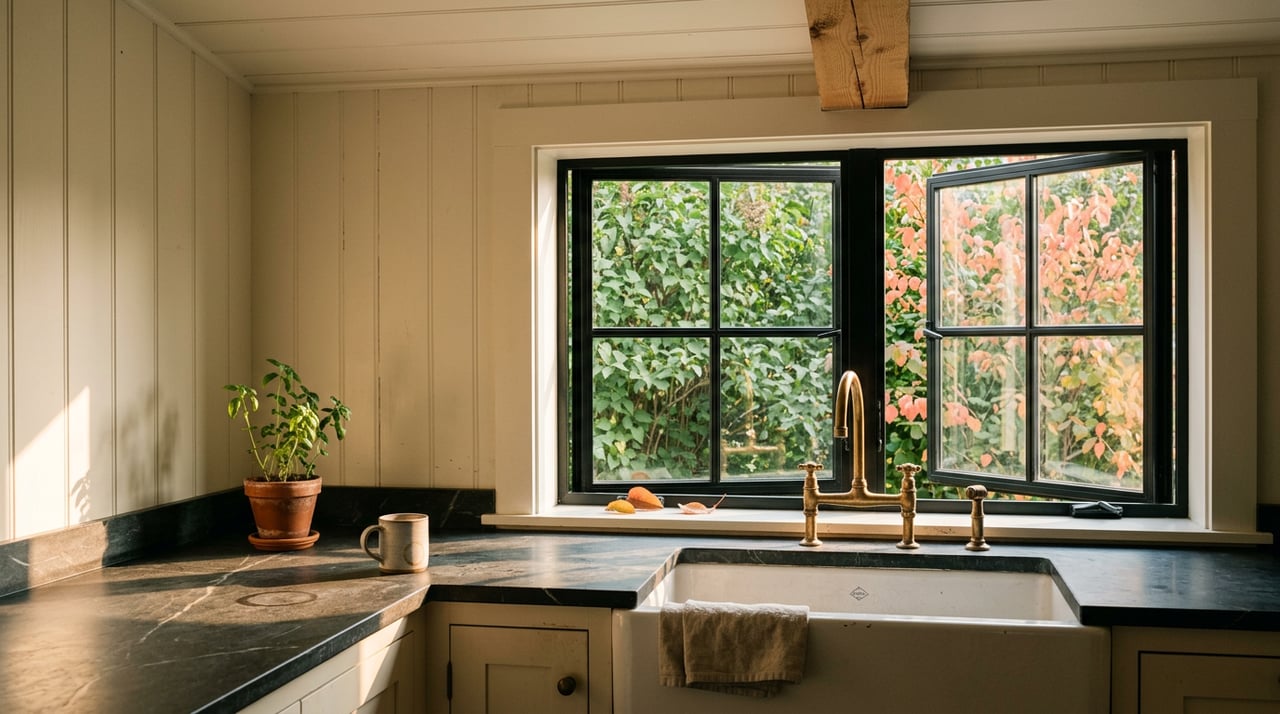
Cabinet selection is one of the most important decisions in a historic kitchen renovation. Inset cabinetry with simple raised or flat-panel profiles and furniture-grade hardware tends to feel at home in Victorian, Craftsman, and Colonial Revival interiors. Painted finishes in period-appropriate colors, rather than stained wood, also read more naturally in older homes. Stone countertops in honed rather than polished finishes similarly tend to integrate more seamlessly with the warm, layered character of historic interiors.
Kitchen Updates That Feel Right in Historic Homes
- Inset cabinetry with period-appropriate hardware creates a furniture-like quality that suits historic proportions well.
- Honed marble, soapstone, or concrete countertops offer both modern function and a material sensibility that reads authentically in older homes.
- Apron-front sinks in fireclay or cast iron are a practical nod to original kitchen fixtures while offering full modern performance.
- Integrated appliances or paneled refrigerators and dishwashers reduce the visual dominance of contemporary appliances in a historic space.
- Restoring original built-ins, butler's pantries, or china cabinets as functional storage honors the home's architectural history while solving real storage problems.
Renovate Bathrooms With Sensitivity
Bathrooms in historic Bozeman homes range from tiny water closets to more generous spaces that were already updated at some point in the twentieth century. In either case, a thoughtful renovation can improve comfort and function considerably while staying true to the home's time period.
Tile selection is often the most impactful decision in a historic bathroom renovation. Small-format hex or subway tile in white or soft off-white reads as authentic and also happens to be widely available and relatively affordable. Larger-format tile, while popular in contemporary renovations, tends to feel out of proportion in the smaller rooms typical of historic homes. Grout lines, sizing, and installation pattern all contribute to how period-appropriate the finished result feels.
Fixtures matter as much as tile. Exposed plumbing in brushed nickel or unlacquered brass, freestanding tubs where the footprint allows, and pedestal or console sinks all reference the design vocabulary of the late nineteenth and early twentieth centuries. These choices also tend to hold up well over time, both aesthetically and in terms of quality, given that many period-style fixtures are manufactured to a high standard.
Bathroom Renovation Principles for Historic Homes
- Small-format hex, penny round, or subway tile in classic colorways keeps the bathroom in visual dialogue with the home's era.
- Freestanding clawfoot or slipper tubs make a strong period statement and are widely available in both restored antique and new reproduction versions.
- Pedestal sinks preserve floor space and maintain an open, period-appropriate feel in smaller bathrooms.
- Exposed pipe fixtures in traditionally finished metals like nickel or brass reinforce the historic character of the space.
- Radiant floor heating beneath tile is a practical upgrade that adds modern comfort without any visual compromise.
FAQs
How Do I Find Contractors With Historic Renovation Experience in Bozeman?
Asking for references specific to historic renovation projects, reviewing completed work in person where possible, and confirming familiarity with local historic preservation guidelines are all good starting points. Working with someone who understands historic materials and methods is one of the most important factors in the outcome of your renovation.
Can I Add Modern Technology to a Historic Home Without Compromising Its Character?
Yes, with thoughtful planning. Whole-home audio, structured wiring, smart thermostats, and lighting controls can all be integrated into a historic home in ways that are largely invisible. Running technology infrastructure during a renovation, when walls are already open, makes installation far less disruptive. Surface-mounted raceway solutions are also available for situations where opening walls is not practical.
What Is the Biggest Mistake People Make When Renovating Historic Homes in Bozeman?
The most common regret is replacing original materials that could have been restored. Original hardwood floors, plaster walls, wood windows, and period millwork are difficult and expensive to replicate once they are gone. Investing in restoration first, and replacement only when restoration is truly not viable, almost always produces a better result both aesthetically and in terms of long-term value.
Your Historic Home Deserves the Right Guidance
Owning a historic home in Bozeman is a privilege and a responsibility. These houses have survived more than a century of Montana winters, multiple owners, and countless renovation trends, and the ones that have held up best are the ones where each update was made with care for what was already there. Modern living and historic character are not at odds with each other; they simply require more thoughtfulness to bring them together.
Whether you are just beginning to think about a renovation or are ready to move forward on a specific project, having a clear sense of what you want to preserve, what you want to improve, and what the local guidelines require sets you up for a result you will be proud of for years to come. The investment you make in doing it right protects both the value of the property and the irreplaceable character that drew you to a historic home in the first place.
If you are considering buying or selling a historic property in Bozeman, I would love to help you navigate the process. Reach out to me, Kelly Broling Smoak, and let's connect about what the Bozeman market holds for you.